Get our free email course, Shortcut to Conversational.
Have conversations faster, understand people when they speak fast, and other tested tips to learn faster.
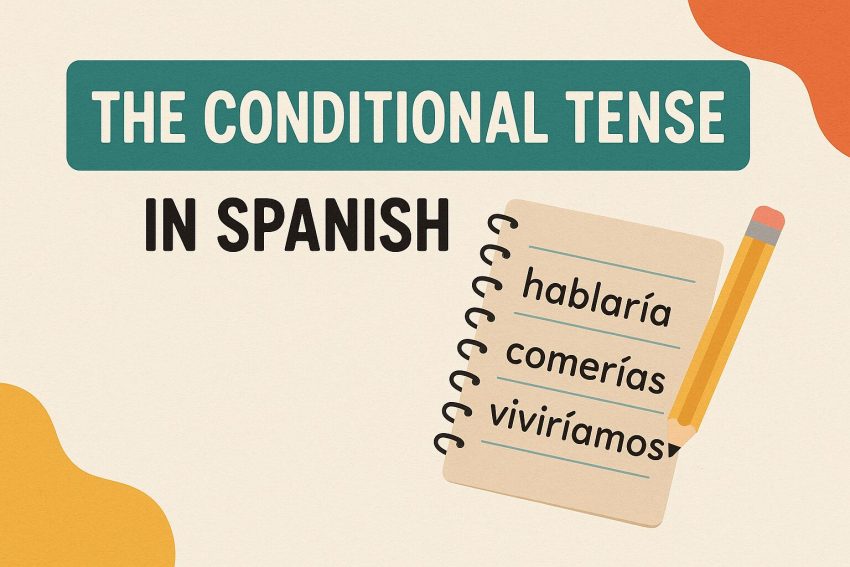
The conditional tense in Spanish is the form that expresses:
- What would happen,
- what could happen, or
- what someone would like to happen.
English often uses helper words like “would,” “could,” or “should.” Spanish does the same thing with one simple verb pattern.
In this guide, we’ll review what the Spanish conditional tense is, how to form it, when to use it, irregular forms, and other useful information to master it.
What is the conditional tense in Spanish?
Think of the conditional as the tense for possibilities and courtesy.
It talks about actions that depend on a condition, polite requests that soften a command, and thoughts about the future told from a past moment.
In English, we reach for “would” and “could.” In Spanish, we change the verb:
- Me gustaría ir al parque.
I would like to go to the park. - Comería pizza todos los días si pudiera.
I would eat pizza every day if I could.
These are not firm plans. They are wishes or ideas that live inside a condition, even if the condition is only in your head.
How to form the conditional in Spanish
The good news is that the conditional is one of the most regular tenses in Spanish. You keep the full infinitive, then add a single set of endings that works for every verb group.
Here’s the formula:
Infinitive + conditional ending
That’s it. You don’t drop the -ar, -er, or -ir, you just add the ending right onto the full verb.
Endings (depending on the subject):
-ía, -ías, -ía, -íamos, -íais, -ían
For example:
hablar → hablaría
comer → comería
vivir → viviría
Conjugation table for regular verbs
Here’s a complete table to illustrate how to form the conditional in Spanish.
| Subject | -ar verb (hablar, “to speak”) | -er verb (comer, “to eat”) | -ir verb (vivir, “to live”) |
| Yo | hablaría, I would speak | comería, I would eat | viviría, I would live |
| Tú | hablarías, you would speak | comerías, you would eat | vivirías, you would live |
| Él, ella, usted | hablaría, he, she, you (formal), would speak | comería, he, she, you (formal), would eat | viviría, he, she, you (formal), would live |
| Nosotros | hablaríamos, we would speak | comeríamos, we would eat | viviríamos, we would live |
| Vosotros | hablaríais, you all would speak | comeríais, you all would eat | viviríais, you all would live |
| Ellos, ellas, ustedes | hablarían, they or you all would speak | comerían, they or you all would eat | vivirían, they or you all would live |
If you can say the infinitive, you can build the conditional. That consistency is why beginners learn this tense early and use it a lot in real life.
Also, keep in mind that “vosotros” is often only used in Spain, while most of Latin America uses “ustedes” for all plural “you.” So instead of “hablaríais, comeríais, viviríais”, you will hear “hablarían, comerían, vivirían”.
Irregular stems, same endings
A short set of verbs uses a changed stem, but the endings above do not change. If you know the future tense stems, you already know these.
- tener → tendr-: tendría
- poder → podr-: podríamos
- hacer → har-: harías
- “you would do or make”
- decir → dir-: dirían
- querer → querr-: querría
Others follow the same logic, like “poner, salir, venir, saber, haber, caber, and valer”.
Conditional vs. future in Spanish
Both tenses attach endings to the full infinitive, and both use the same irregular stems. That visual similarity invites mistakes.
The easiest way to tell them apart is by meaning. The future tense says what will happen. The conditional says what would happen, often if a condition is met, or when we want to sound polite.
- Iré a la tienda mañana.
I will go to the store tomorrow. - Iría a la tienda mañana, pero no tengo dinero.
I would go to the store tomorrow, but I do not have money.
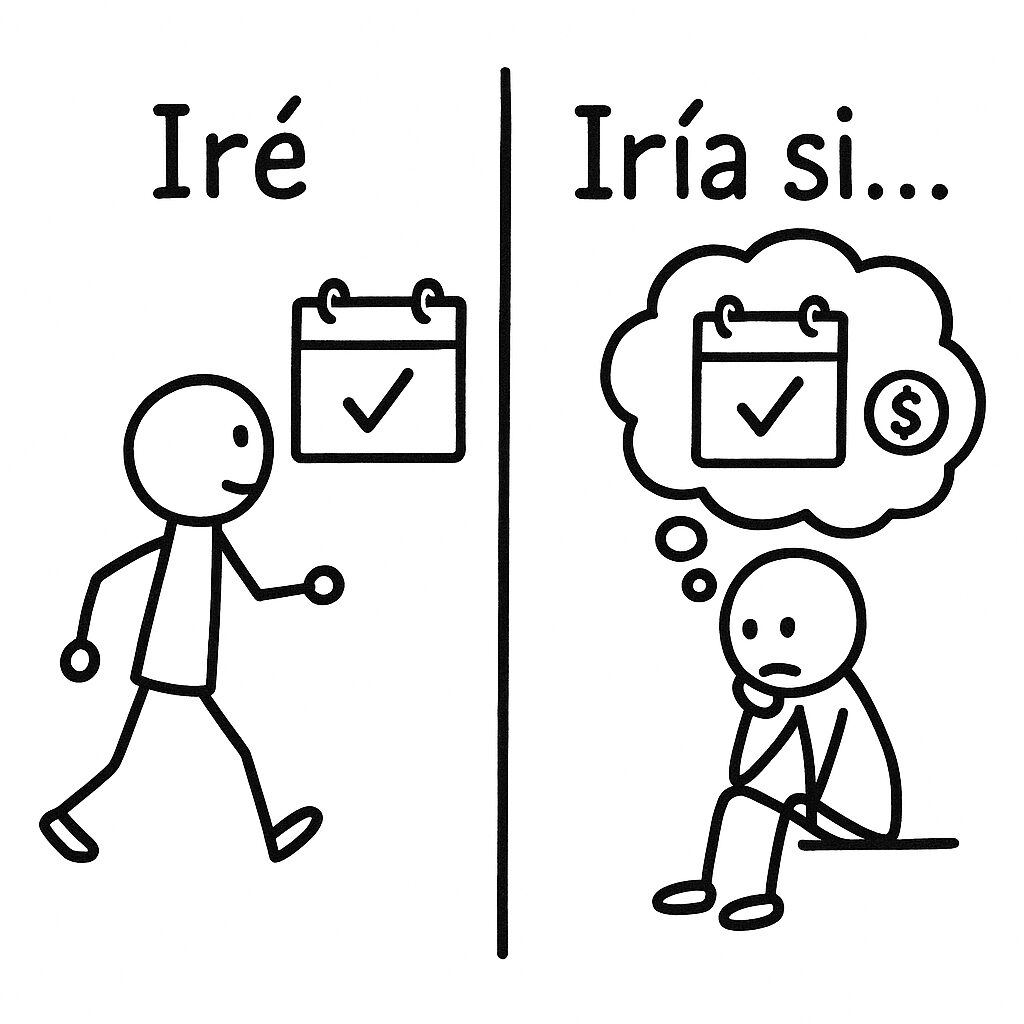
Use this contrast whenever you are unsure. If you can add “if” in English, you likely need the conditional in Spanish. If you are making a firm plan or promise, you likely need the future.
When to use the conditional in Spanish
Use the conditional when an action is not a firm plan, but something that would, could, or should happen under certain conditions. In this section, you will see the most common situations where learners need it, with short examples you can reuse.
Polite requests and soft wishes
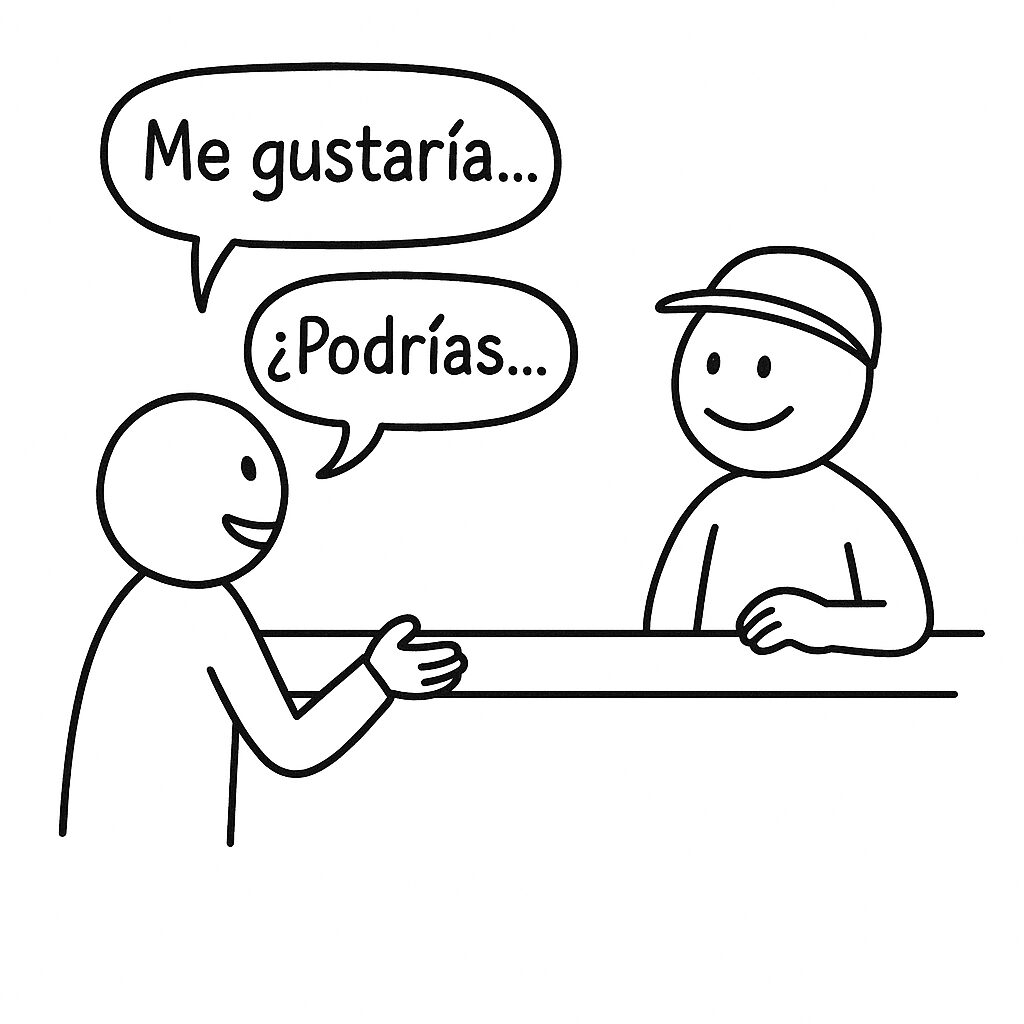
Spanish prefers the conditional for polite requests, offers, and desires. It softens the tone the same way “could you” and “I would like” do in English.
Using the present can sound too direct in service situations or with people you do not know well!
- ¿Podrías ayudarme, por favor?
Could you help me, please? - Me gustaría reservar una mesa para dos.
I would like to book a table for two. - ¿Te importaría cerrar la puerta?
Would you mind closing the door?
Hypothetical situations with “if”
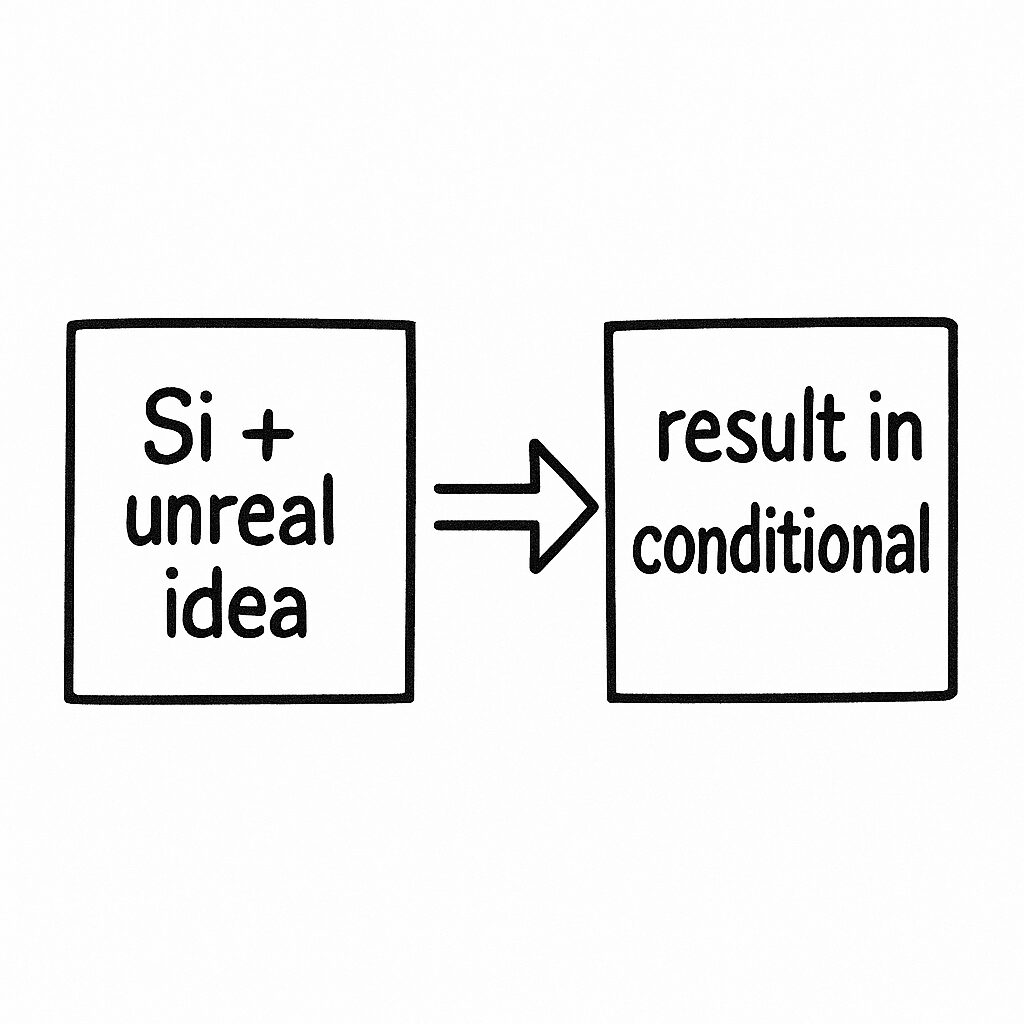
This is the classic “what if” structure. The first part sets an unreal or unlikely condition with si. The second part shows the result with a conditional verb.
English mirrors the pattern with “If X happened, Y would happen.”
- Si tuviera tiempo, leería más.
If I had time, I would read more. - Si fueras un superhéroe, ¿qué harías?
If you were a superhero, what would you do?
Advice and the idea of “should”
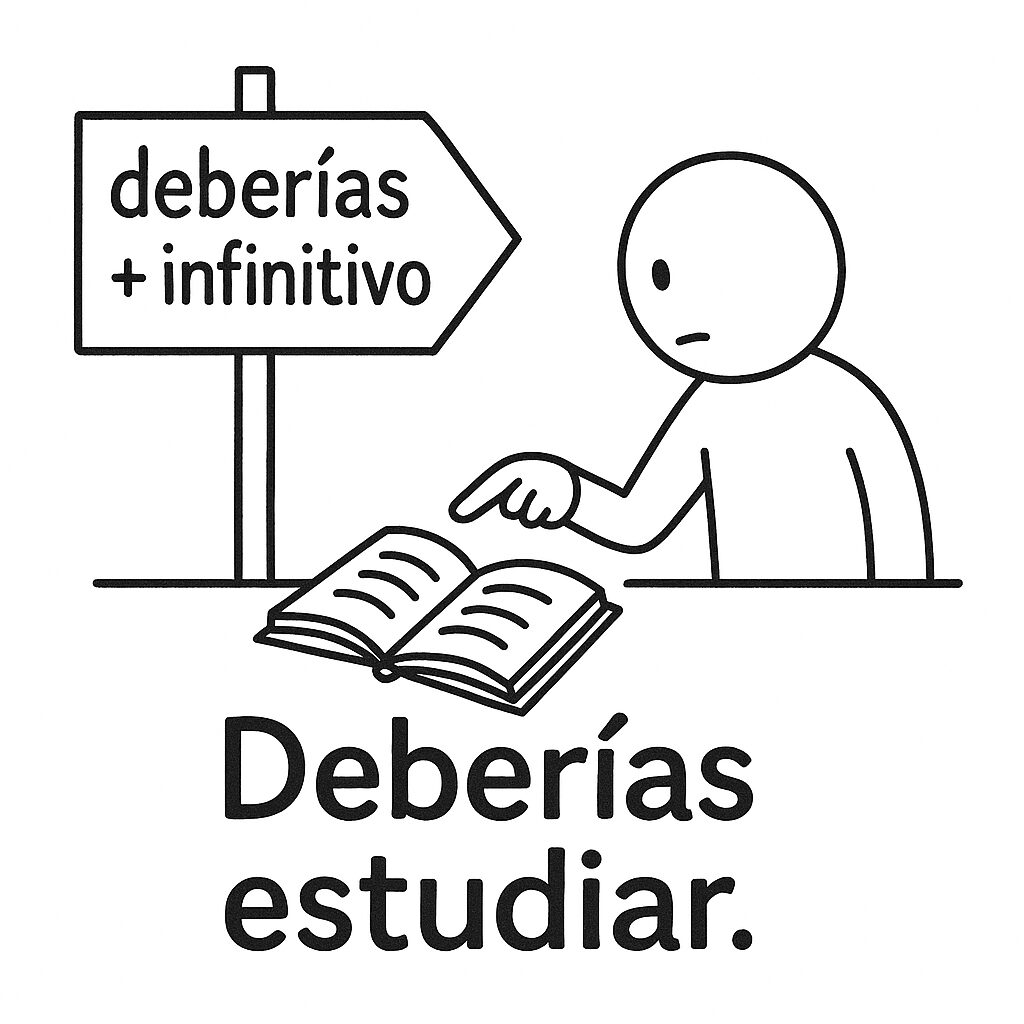
The most common way to express advice is deber in the conditional, then an infinitive.
- Deberías estudiar un poco cada día.
You should study a little every day. - No deberíamos llegar tarde.
We should not arrive late.
For softer suggestions, podrías also works.
- Podrías practicar con música en español.
You could practice with music in Spanish.
Reported speech, or future seen from the past
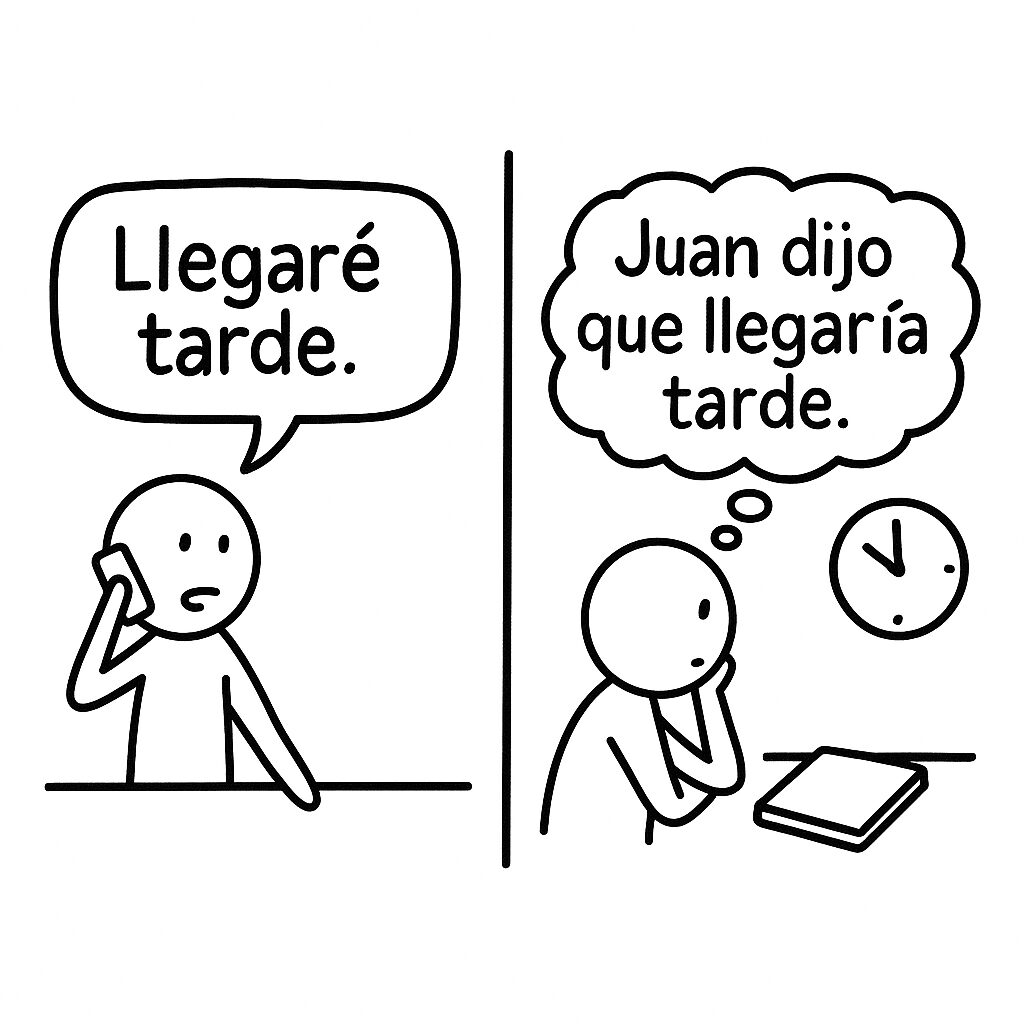
When we report what someone said in the past about a later action, English uses “would.” Spanish uses the conditional for the same idea. This keeps the timeline clear.
- Juan dijo que llegaría tarde.
Juan said he would arrive late. - Pensé que llovería hoy.
I thought it would rain today.
Guessing the past
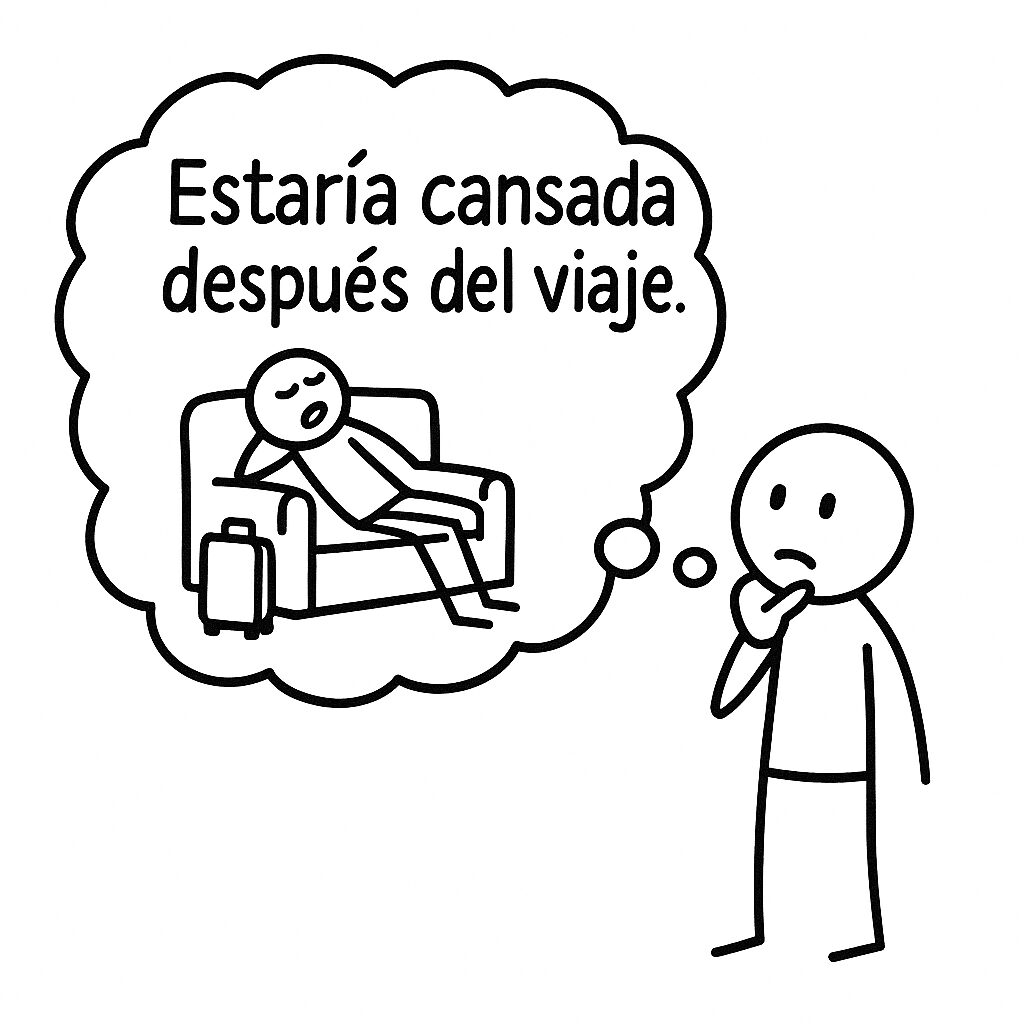
Spanish can use the conditional to express a polite guess about a past moment. English often uses “probably” for the same effect.
This is an optional nuance for beginners, but you might hear it every now and then.
- Serían las cinco cuando salieron.
It was probably five when they left. - Estaría cansada después del viaje.
She was probably tired after the trip.
4 common mistakes to avoid
Even with clear rules, beginners tend to stumble in the same four spots.
1. Using the conditional for past habits
English sometimes uses “would” to talk about routines in the past, as in “When I was a kid, I would play outside.” Spanish does not use the conditional for that meaning. Use the imperfect past.
- ✅ Correct:
Cuando era niño, jugaba afuera todos los días.
When I was a kid, I used to play outside every day. - ❌ Not this:
Cuando era niño, jugaría afuera todos los días.
(incorrect for a past routine)
2. Dropping the infinitive ending
Do not remove -ar, -er, or -ir. Keep the full verb and add the conditional ending.
- ✅ Correct:
Yo hablaría contigo mañana.
I would speak with you tomorrow. - ❌ Not this:
Yo hablía contigo mañana.
(incorrect because the -ar was dropped before adding -ía)
3. Forgetting the accent
The í in -ía, -ías, and so on is part of the form. It separates the conditional from other tenses in writing.
- ✅ Correct:
Ella diría la verdad.
She would tell the truth. - ❌ Not this:
Ella diria la verdad.
(incorrect because the accent is missing)
4. Confusing future and conditional
Ask the will vs would question. If “if” fits, choose the conditional. If it is a commitment, choose the future.
- ✅ Correct:
Iré a la tienda mañana.
I will go to the store tomorrow. - ❌ Not this:
Iría a la tienda mañana.
(incorrect for a firm plan; this means “I would go,” not “I will go”)
Mini practice you can say out loud
Complete each sentence with a conditional idea of your own.
- Con más tiempo, aprendería guitarra.
With more time, I would learn guitar. - Con más dinero, viajaríamos a México.
With more money, we would travel to Mexico. - ¿Podrías repetir, por favor?
Could you repeat, please? - Deberías ver una serie en español con subtítulos.
You should watch a Spanish series with subtitles. - Ella dijo que llamaría más tarde.
She said she would call later.
Quick recap
This is your final checkpoint on everything you’ve learned about the conditional tense in Spanish:
- Meaning: Conditional equals would, could, or should, depending on context.
- Form: Infinitive + -ía, -ías, -ía, -íamos, -íais, -ían, with the accent on “í”.
- Irregulars: New stems like tendr-, podr-, har-, dir-, querr-, with the same endings.
- Core uses: Polite requests and wishes, unreal if… then results, advice with “deber”, future from a past point, and optional past guesses.
- Avoid: English “would” for past habits is not the Spanish conditional. Use the imperfect.